Yapım Tarihi - 2026
Süre - 00:04:15
Format - Deneysel, Renkli, Türkçe
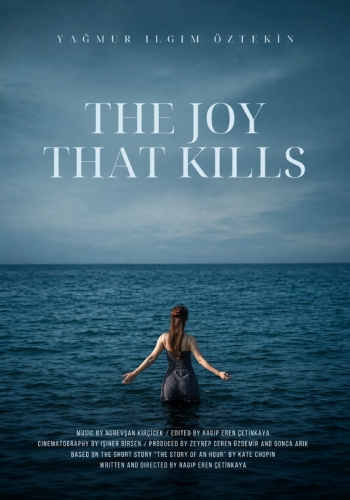
Yönetmen / Director - Eren Ragıp Çetinkaya
Senarist / Writer - Eren Ragıp Çetinkaya
Yapımcı / Producer - Zeynep Ceren Özden, Gonca Arık
Based on the Short Story by - Kate Chopin
Ana Karakter / Key Cast
Yağmur Ilgım Öztekin
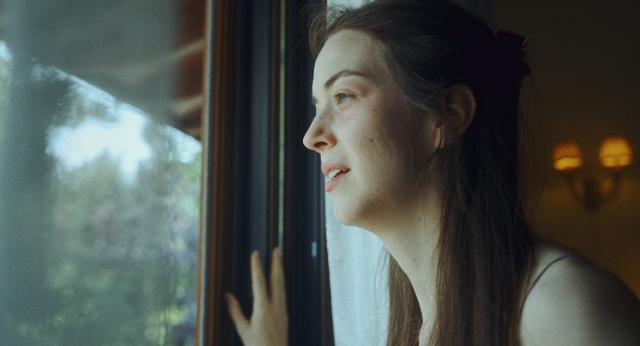
Following her husband's death, Bahar sits beside his body, exhausted by grief
and by a marriage defined by obedience.
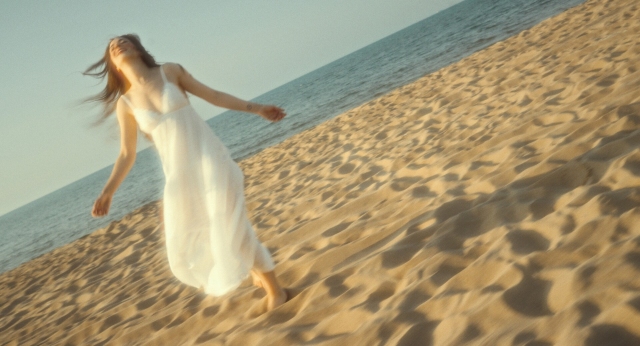
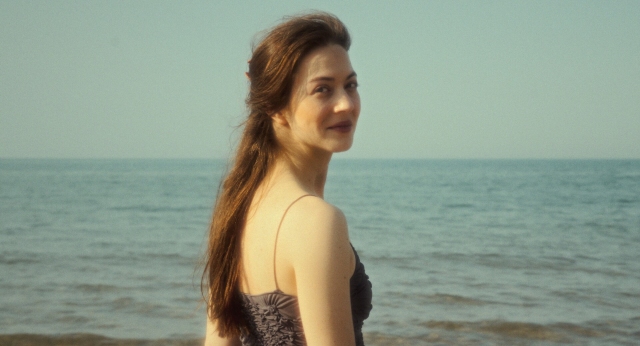
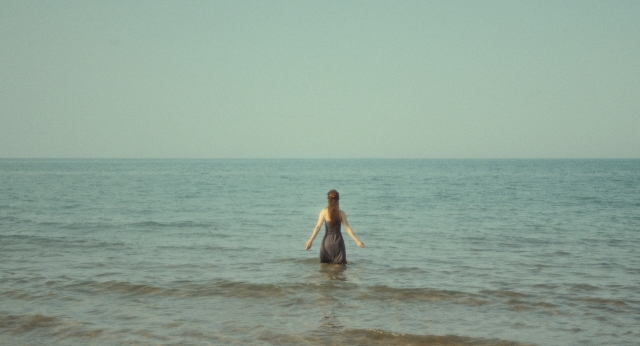
When a sudden gust of wind draws her to her feet, she glimpses another version
of herself, dressed in white and running freely along a beach. As her perception
of reality fractures, revealing both visions of liberation and nightmarish
reminders of her marriage, Bahar is torn between guilt and the intoxicating
possibility of a life beyond the roles that confined her.
What drew me to Kate Chopin’s “The Story of an Hour” was the social
contradiction at its center - a woman is expected to perform grief, yet her
husband’s death briefly opens a space in which she can imagine a life no longer
organized around marital duty and obedience.
In adapting the story, I did not want to illustrate its events literally or
reduce Bahar’s experience to a purely psychological awakening. Instead, I wanted
to explore how the structures surrounding her have shaped her inner world. The
enclosed room, the open window, the changing light, and the vision of a beach
express the tension between the domestic space assigned to her and the
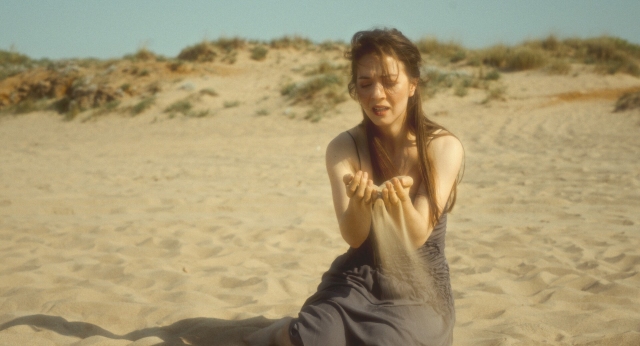
possibility of a life beyond that role. When Bahar encounters another version of
herself by the sea, it remains uncertain whether she is seeing something real,
remembering a possibility that has been denied to her, or imagining the person
she might become outside the limits imposed upon her.
Influenced particularly by the dream logic and spatial fluidity of Maya Deren’s
“At Land,” I approached the film through association, rhythm, and repetition
rather than conventional exposition. The ambiguity is intentional, but it is not
politically neutral. What matters is not whether Bahar physically leaves the
room, but that she momentarily recognizes that the order confining her is
neither natural nor inevitable.
I do not see politics as a message added to a film from the outside. Politics
are already present in bodies, spaces, gestures, silences, and in the social
relations that determine whose time and labour belong to whom. With “The Joy
That Kills,” I wanted to capture the quiet but disturbing moment when a woman’s
desire to exist for herself comes into conflict with a patriarchal family
structure that demands care, sacrifice, obedience, and even grief from her.
2. Üzüm Bağları Kısa Film Festivali, Öğrenci Film Yarışması, Finalist. 2026
Kaynak
Üzüm Bağları Kısa Film Festivali
FilmFreeway