Yapım Tarihi - 2024
Süre - 00:18:00
Format - Kurmaca, Renkli, Türkçe
Yönetmen / Director - Arantxa Iberra, Naz Tokgöz Yapımcı / Producer - Paul-Lou
Lemiux, Mete Gültiken, Naz Tokgöz
Krizalit, Melisa ile yabancı hissetmenin zorluklarını yaşayan Deniz'in
hikâyesini anlatıyor. Değişen bir Türkiye'de geçen film, kimlik, aidiyet ve
derin ama zaman zaman sınırlı bir şehirde bağlantı kurma yolculuğunu incelikle
keşfediyor.
Krizalit telis the story of Deniz, navigating love with Melisa and the
challenges of feeling like an outsider, while searching for identity and
belonging in a changing Turkey.
26. İzmir Kısa Film Festivali, Ulusal Panorama Bölümü, Gösterim Seçkisi. 2025
Kaynak
İzmir Kısa Film Festivali
CHRYSALIS (2024)
Director - Arantxa Ibarra & Naz Tokgoz
Producer - Paul-Lou Lemiux, Mete Gültiken, Naz Tokgöz
USA, Turkey
Duration: 18 minutes
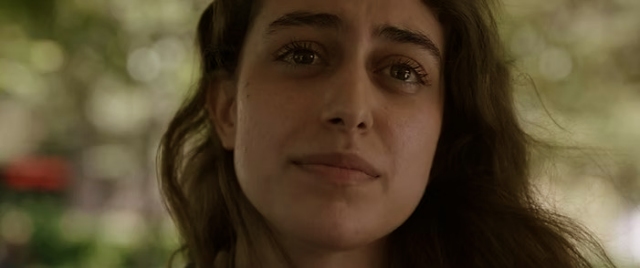
The short film starts off strong. Our story begins with a powerful detail of a
young woman who appears to be shaken and sad, you wonder what’s going on with
her.
You can feel like you’re already drawn into the story, because it feels like
she’s hiding something, despite her emotions are etched not only on her face but
in the air around her.
There’s a strong conveyance of emotion, driven by an evidently intense — but
never over the top — performance.
The trick to delivering an intense performance often lies in the balance between
expression and restraint.
Actors can sometimes fall into the trap of over-exaggerating their emotions,
attempting to convey strong feelings in a way that comes across as forced or
over-the-top.
They try to "show" those emotions, rather than "conveying" them to the spectator,
and as you watch them, you can feel how they try to make the scene appear so “strong”,
that they're not really believing in what the character is saying. This can lead
to a portrayal that feels exaggerated and ultimately feel “off” to the audience.
In this case, however, our protagonist masterfully balances and conveys deep
emotions throughout the entire duration of the short, without ever crossing that
line into excess. Each scene is dense yet authentic, allowing her performance to
come out as genuine but realistic. This approach makes her portrayal not only
effective but also impactful and memorable.
Our young protagonist goes through an incessant russian roulette of emotions
throughout the entire movie, and you can buy every minute of it.
It becomes clear that this which we are watching is our heroine, the young
Deniz—a fragile soul swept up in an inner, dense chaos.
“Chrysalis” is a short film that explores themes of love and community in
Istanbul, “a city that is both beautiful and complex”, as the directors, Arantxa
Ibarra and Naz Tokgoz, say. It's a co-production that was produced between New
York (USA) and Turkey.
The camera’s gaze introduces Deniz with great detail, as if unveiling a secret.
The music, subdued and introspective, intertwines with a voice-over narration
delivered in a tone that is calm, with a poetic undertone. Together, they create
an atmosphere that feels like a whisper. It feels as though the scene is leaving
subtle hints—but what are they pointing to?
Everything about the opening feels intimate and personal. You feel as if you’re
right there with Deniz, you have a chance to see what’s actually going on with
her life, something that her outside world is not fortunate enough to discover.
You can feel like the adventure that she’s about to start is internal, not
external. She’ll probably go somewhere significant, probably, but the route will
only be inward, deeper, and darker. Question is: can we accept the challenge?
The delightful undertone of the music, mixed with an impeccable cinematography
seems to reply for yourself, not leaving you much of a choice: yes, we’re ready
to go on this journey with her.
The film then transitions to a second scene, where our young protagonist, Deniz,
interacts with a peer, Melisa.
There’s a little game that is played around the concept of “traveling”. The two
girls discuss travelling to and travelling from, and it is palpable how the
conversation is concerning both the physical travel and then the spiritual/inner
journey.
When asked where the protagonist, the young Deniz, comes from, she genuinely
replies that she’s from space, a galaxy “far far away”. Despite the smiles and
her big, shiny eyes, you start to understand how she’s not talking about her
body, rather her different nature. She’s both confessing that she doesn’t feel
like everyone else, and is hinting a cry for help at the same time.
You can tell, she wishes to be “normal”, a “human” like everybody else, let’s
say, but she simply can’t: she doesn’t feel like it.
“Will you help me fit, or will you accept me for who I am — as an “alien”?”.
This is the question that her happy face, and her shy glances that keep
repeatedly falling down, hide. What will the answer to that hidden question be?
The editing is excellent, it adds the right balance and diversity, pairing some
creative shots together that keep following the original and poetic tone of the
story.
The short film excels in several technical aspects, showcasing great sound
design that enhances the overall atmosphere, nicely wrapped and welcomed by a
delicate and effective soundtrack.
But in this short about love and conflicts set in Turkey, there's also another
character that shine though: a middle-aged woman which we can call "the mother".
"The mother" is a conflicted woman with a strong internal conflict and
ambivalence.
In the way she first presents herself, she appears bigoted and almost two-dimensional,
as if she has no personality of her own and is blindly subject to the fanaticism
and conventions she grew up with. As a mother, she could have learned to accept
her daughter as she is, or at the very least, kept her secret from the father—but
instead, she chooses to expose her daughter and confess everything, even though
she wasn’t obliged to.
What initially seems like a character lacking the slightest sense of empathy or
depth later reveals itself to have a hidden and buried complexity. Her repressed
anger and fervor make her a character for whom one can feel a strange kind of
sympathy.
The line she uses to begin a memorable mologue, demonstrates this depth.
She asks, “Where did you learn to love?” This is a powerful phrase and a
question that not only cuts to the core of the situation—the concept of pure
love—but skips over the main issue of homosexuality. A more superficial woman
might have started the conversation by focusing on the topic of homosexuality,
asking questions like, “When did you realize you were gay?”, or alternatively,
“What did you see in her?”
“Where did you learn to love?” is a phrase centered on the universal concept of
love and therefore reveals that the mother may or may not have moved beyond the
“problem” of homosexuality.
The phrase itself also betrays a certain hidden naivety, not only because—by
speaking of love—the mother draws a comparison between herself and her younger
self, harking back to a carefree and innocent time in her childhood, but also
because it hints at a faint curiosity, so to speak. It reflects a real interest,
ignorance, and perhaps, jealousy, as if, deep down, she too wants to know how to
love with that same spontaneity, which is something she certainly always
struggled with.
Talking about herself as a child while referring to love, also reveals how
lonely and miserable her life has been over the years, since she has no recent
memories of true love.
This short film unfolds like a delicate tapestry, woven with threads of
introspection. It boasts a bold yet subtle direction, skillfully balancing
clarity with an emotional depth that lingers long after the credits roll. The
performances are nothing short of remarkable, with Naz Tokgoz—also co-director
alongside Arantxa Ibarra—delivering a portrayal that is intense yet profoundly
genuine.
“Chrysalis” feels beautifully complete, painting a vivid picture of a reality
that often remains in the shadows: being a girl who loves another girl, in
Turkey. The story and screenplay is also so vivid that you kind of start to
wonder whether this is a real-event-inspired story or not. We should talk to the
directors to find out!
The creators describe their work as a "passion project brought to life on a
very limited budget", but upon watching it, it definitely doesn’t feel budget
restricted: the film radiates an energy that belies any of the challenges the
team faced while shooting between two countries: Turkey and the United States.
This speaks volumes about the commitment of the entire team, who have crafted
something truly special.
It all started off as a thesis project in NYC - as the directors say - but who
knows where this short could go? In a galaxy far, far away? Perhaps, but what we
are sure of, is that “Chrysalis” will journey across this globe, celebrated for
its authenticity!