Yapım Tarihi - 2026
Süre - 00:08:17
Format - Kurmaca, Renkli, Türkçe
Yönetmen / Director - Mehmet Rutkay Açıkgöz
Senarist / Writer - Mehmet Rutkay Açıkgöz
Yapımcı / Producer - Erman Taner, Elif Örüm, Beren Gümüştaş, Mehmet Yılmazer
Ana Karakter / Key Cast
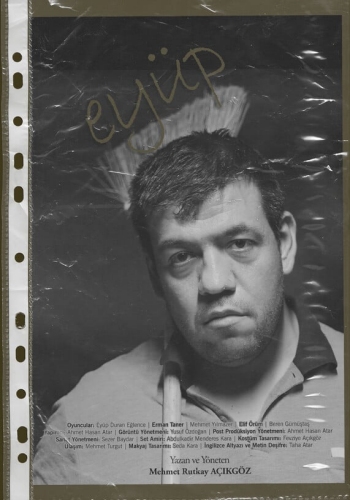
Eyüp Duran Eğlence
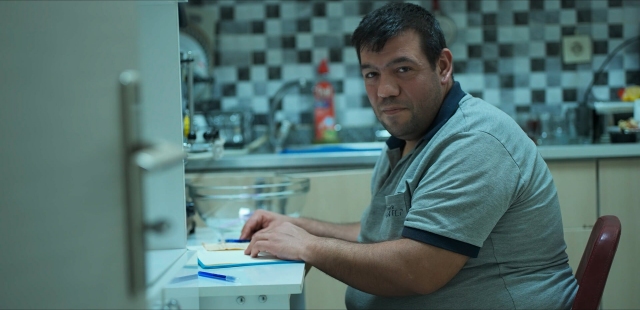
Kamu kurumunda hademe olarak çalışan ve okuma yazma becerisi sınırlı olan Eyüp,
her gün aynı koridorları süpürür. Masaları siler. Çöpleri toplar. İşini
sessizce, etrafı insanlarla çevrili olmasına rağmen kimsenin fark etmediği bir
şekilde yapar. Konuşur ve güler, ancak kelimelerle kurulan dünyanın dışında
kalır. Bir gün, yerde bulduğu ve anlamını anlayamadığı bir şiir, hayatında derin
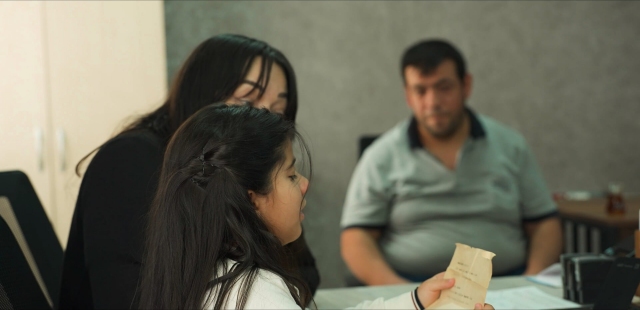
bir çatlak açar. Kağıdı atmaya kıyamaz. Cebine koyar. Kurumdaki diğer
çalışanlardan şiiri yüksek sesle okumalarını ister. Aynı şiiri tekrar tekrar
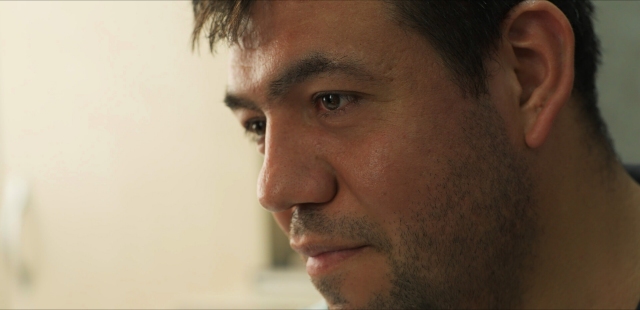
dinler. Yüzünde, anlamını kavramaya çalışıyormuş gibi bir konsantrasyon ifadesi
vardır. İçinde bir eksiklik duygusu büyür. Harfleri çözemediği için, şiiri
ezberlemeye çalışır. Kelimelerin sesini zihninde tutar. Anlamını anlamadan
taşıdığı bu şiir, yavaş yavaş onun için bir çağrıya dönüşür. Ne zaman fırsat
bulsa, kağıdı çıkarır. Ona bakar. Tekrar tekrar, o anlaşılmaz harflerin ardında
gizlenmiş kapıyla mücadele eder. Zamanla şiirin bir kısmını ezberler. Ama bu
yeterli değildir. Çünkü artık sadece kelimeleri duymak istemez, onları anlamak
ister. Arzu ve utanç arasında gidip gelir. Bir gün, kuruma gelen ve kolaylıkla
okuyup yazan küçük bir çocuğu görünce, bu onun için bir kırılma noktası olur.
Kendisinden çok daha küçük birinin kelimelere bu kadar hakim olması, Eyüp'ün
içinde derin bir sarsıntı yaratır. O anda kendi eksikliğini açıkça görür. Orada
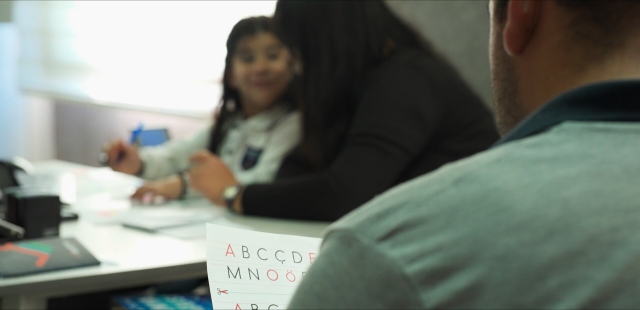
görevli olarak çalışan çocuğun annesinin ona verdiği alfabe tablosu, yeni bir
başlangıcın kapısını açar. Tabloyu alır. Çay salonunda fark edilmeyen anlarda
harfleri tek tek yazar. Yavaş yavaş onları çözmeye başlar. Kelimeler oluşturur.
Yavaş yavaş, şiirin içinde gizli olan anlama yaklaşır. Bu süreç boyunca kendi
varlığını da yeniden inşa eder. Bir kalem alır ve kendi adını yazar. Eyüp. Basit
gibi görünen bu an, onun için büyük bir dönüm noktası haline geliyor. Çünkü
artık başkalarının sözleriyle değil, kendi yazdığı mektuplarla var oluyor.
Eyüp, a janitor working in a public institution who has only limited literacy
skills, sweeps the same corridors every day. He wipes the desks. He collects the
trash. He does his work in silence, surrounded by people yet unnoticed by anyone.
He talks and laughs, yet remains outside the world built by words. One day, a
poem he finds on the floor, whose meaning he cannot understand, opens a deep
crack within his life. He cannot bring himself to throw the paper away. He puts
it into his pocket. He asks the other employees in the institution to read it
aloud to him. He listens to the same poem over and over again. There is a look
of concentration on his face, as if trying to grasp its meaning. Inside him
grows a feeling of incompleteness. Since he cannot decipher the letters, he
tries to memorize the poem instead. He holds onto the sound of the words in his
mind. This poem, whose meaning he carries without understanding, gradually turns
into a calling for him. Whenever he has the chance, he takes out the paper. He
looks at it. Again and again, he struggles with the hidden door concealed behind
those incomprehensible letters. Over time, he memorizes part of the poem. But
this is not enough. Because now he no longer wants merely to hear the words, he
wants to understand them. He moves back and forth between desire and shame. One
day, seeing a small child who comes to the institution reading and writing with
ease becomes a breaking point for him. The fact that someone much younger than
himself has mastery over words creates a deep upheaval inside Eyüp. At that
moment, he clearly sees his own deficiency. The alphabet chart given to him by
the child’s mother, who works there as an officer, opens the door to a new
beginning. He takes the chart. During unnoticed moments in the tea room, he
writes the letters one by one. He slowly begins to decipher them. He forms words.
Little by little, he approaches the meaning hidden within the poem. Throughout
this process, he also reconstructs his own existence. He picks up a pen and
writes his own name. Eyüp. This moment, which may seem simple, becomes a great
threshold for him. Because now he exists not through the words of others, but
through the letters he writes himself.