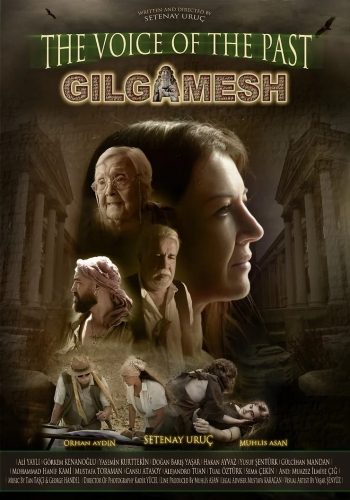
Yapım Tarihi - 2022
Süre - 00:14:56
Format - Kurmaca, Renkli, Türkçe
Yönetmen / Director - Setenay Uruç
Geçmişin Sesi adlı kısa filmimde, vurgulanan mesajların tarihsel bir sırayla
gerçek mekanlarda çekilmesine çok dikkat edildi. İstanbul Arkeoloji Müzeleri
Eski Şark Eserleri Müzesi, Sümer tabletleri ve o döneme ait bilgilerle doludur.
Ve bu güçlü nedenlerle, sahnelerin çoğu İstanbul Arkeoloji Müzesi'nde çekildi.
Destanın ilk tableti, filmdeki kadın karakter aracılığıyla MÖ 2000'e gerçek bir
yolculuk sunuyor.
2. Bornova Kısa Film Günleri, Gösterim Seçkisi. 2022
2. İstanbul Nartugan Film Festivali, Gösterim Seçkisi. 2022
Kaynak
Bornova Kısa Film Günleri
Gılgamış Destanı, insanlık tarihinde yazılmış ilk kitaptır. Daha önce yazılmış
herhangi bir kitap veya metin yoktur. Bu konuda ilk sıra dışı detay bu.
Kayıtlarda Sümerlerin kahraman kralı Gılgamış'ın 2000/4000 yılları arasında
yaşadığı anlaşılıyor. Homeros'un Odysseia'sından on yüzyıl önce yazılan bu
olağanüstü destan, günümüzün modern zamanlarında kolayca okunabilen ve
anlaşılabilen bir dile sahiptir. Bu metnin her yüzyıla göre hareket ettiğini
söylemek yanlış olmaz. İkincisi ise sıra dışı detayları.
Hem Eski Ahit hem de Yunan mitolojisi üzerinde muazzam bir etkisi vardır. Hemen
hemen tüm hikayeler ilk olarak Gılgamış Destanı ile başlar diyebiliriz. Nuh ve
Tufan efsanesi doğrudan destandan alınmıştır.
Geçmişin Sesi adlı kısa filmimde, vurgulanan mesajların tarihsel bir sırayla
gerçek mekanlarda çekilmesine çok dikkat edildi. İstanbul Arkeoloji Müzeleri
Eski Şark Eserleri Müzesi, Sümer tabletleri ve o döneme ait bilgilerle doludur.
Ve bu güçlü nedenlerle, sahnelerin çoğu İstanbul Arkeoloji Müzesi'nde çekildi.
Destanın ilk tableti, filmdeki kadın karakter aracılığıyla MÖ 2000'e gerçek bir
yolculuk sunuyor.
Arkeolojik kazı alanı ve Sümer Tabletleri, gerçek olanların yansıması olarak
özel ortamlarda hazırlanmıştır. Her çekim mekanı, eserin kendisine saygı
duyularak ve özgünlüğün özü korunarak titizlikle korunmuştur.
George Frideric Handel'in muhteşem aryası "Lascia Ch'io Pianga" ve Arnold
Böclin'in "Die Toteninsel" (Ölüler Adası) gibi sahneleri tamamlayan en önemli
müzik eserleri kullanıldı.
Filmde kullanılan sahnelerde hangi müziklerin kullanıldığı benim için çok
önemli. Final sahnesini oluşturan son 3 sahnede değerli sanatçı Tan Taşçı'nın
müzikal eserini kullandım. Kendisine filme verdiği destekten dolayı teşekkür
ediyorum.
Dünya yaratıldığından beri hepimiz birbirimize görünür ve görünmez bağlarla
bağlıyız. Ve her kahraman kendi yolculuğunda çeşitli dönüşümlerden geçerken
kendi yaratımına doğru ilerleyen bir serüvenin tek temsilcisi olduğu kesin.
Onlar benzersiz.
The Epic of Gilgamesh is the first book written in the history of mankind. There
are no books or texts written before. This is the first extraordinary detail
about it.
In the records, it seems that the heroic king of the Sumerians, Gilgamesh, lived
between 2000/4000. Written ten centuries before Homer's Odyssey, this
extraordinary epic has a language that can be easily read and understood in
modern times of today. It wouldn't be wrong to say that this text acts upon
every century. The second one is its extraordinary details.
It has an enormous influence on both the Old Testament and Greek mythology. We
can say that almost all stories begin with the Epic of Gilgamesh first. The myth
of Noah and the Flood was directly taken from the epic.
In my short film called The Voice of the Past, strict attention was paid for
shooting the highlighted messages in real places in a historical order. The
Museum of Ancient Oriental Works of Istanbul Archaeological Museums is full of
Sumerian tablets and information about that period. And for these strong reasons,
most of the scenes were shot in the Istanbul Archeology Museum. The first tablet
of the epic provides a real journey to 2000 BC through the female character in
the film.
The archaeological excavation site and the Sumerian Tablets were prepared in
special environments as reflections of the real ones. Each shooting location was
meticulously protected by respecting the work itself and preserving the essence
of the authenticity.
The most important musical works that complete the scenes were used, such as
George Frideric Handel's magnificent aria “Lascia Ch'io Pianga” and Arnold
Böclin's "Die Toteninsel" (Isle of the Dead).
Which music is used in the scenes used in the movie is very important to me. I
used the musical work of valuable artist Tan Taşçı in the last 3 scenes that
make up the final scene. I thank him for his support of the film.
We are all connected to each other with visible and invisible ties since the
world was created. And every hero is definitely a sole representative of an
adventure that progresses towards their own creation while going through various
transformations in their own journey. They are unique.
Director's Statement:
The mourning, which is the common heritage of humanity, and the mourning
processes that vary according to the culture have shaped the mythology. This
deep bond is one of the strongest motivations of the film.
The cast consists of people who are amazing at their job and they reflect the
same meticulousness in the script preparation. Dear theater artists Orhan Aydin
and Muhlis Asan are among the building blocks of the film. And Sumerologist dear
Muazzez Ilmiye Cig has added depth and invaluable meaning to the film with both
her academic counseling and her first acting experience. I am grateful to all my
performer friends and the team.
Summary of the film:
Gilgamesh, who lived between 2000/4000 BC, is the heroic king of the Epic of
Gilgamesh, the first written text in history. He grieves deeply after the death
of his beloved friend, his dearest friend Enkidu. At the end of this sorrowful
period, Gilgamesh makes a decision and goes on a journey to seek immortality
standing against the Gods. At the end of this very difficult, even impossible
journey, he finally meets Utnapishtim…
Sinemis, a female character living in the modern years of 2021, has a successful
career and a happy life. Until one evening, when she loses all her beloved ones
in a car accident... During this sad and hurtful period, she laments deeply,
then she decides to end her life unable to bear the weight and effects of all
these emotions. But life will offer her a second chance when she least expects
it. In the script, we see the intersecting paths of two different characters,
the reasons for them to come together, and where they reach at the end.